

SV/
Most shoes wear out in five places, and four of them can be dealt with long before the shoe is finished. Below are the five we see most often at the shoemaker’s, what each one means and what can be done about it.
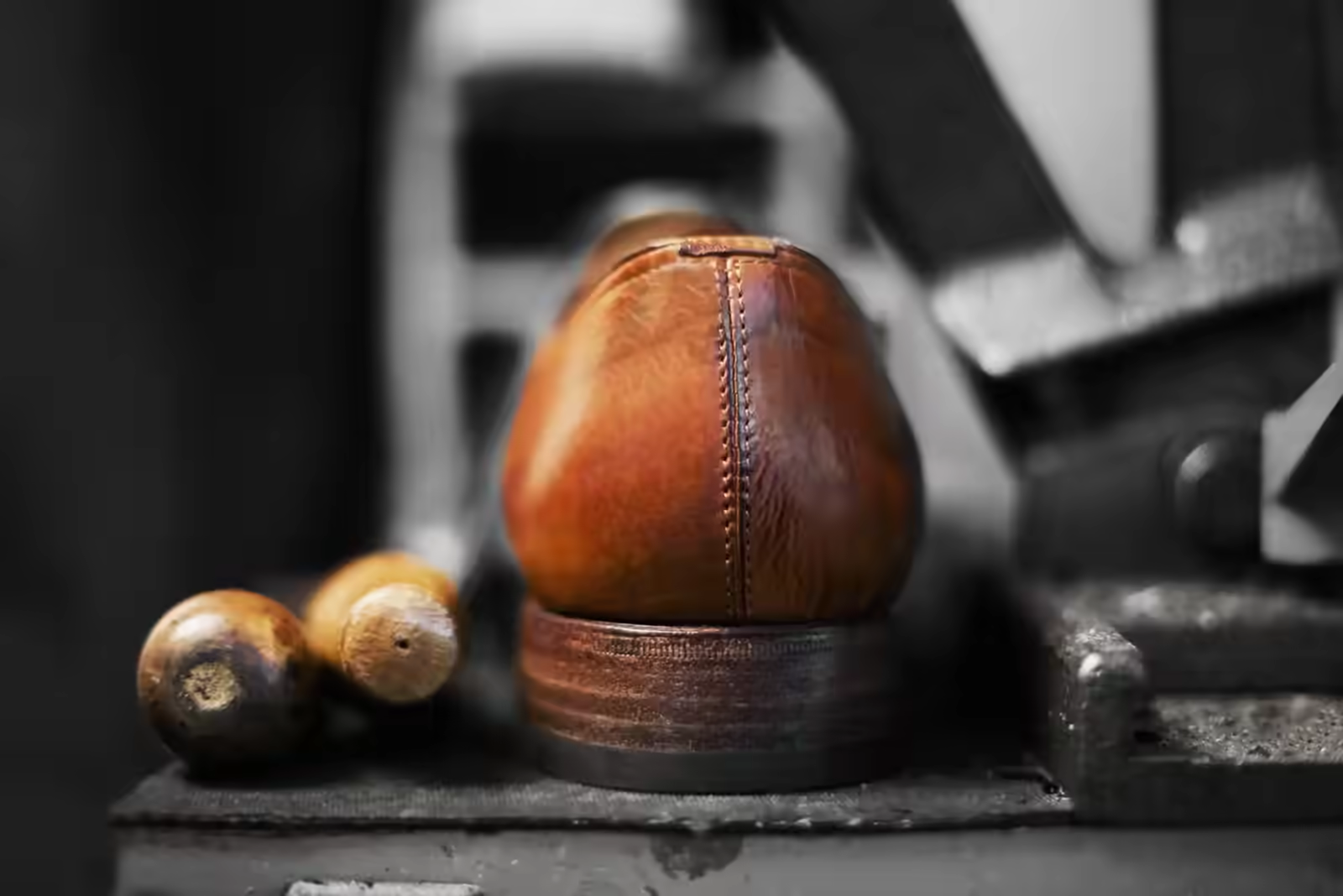
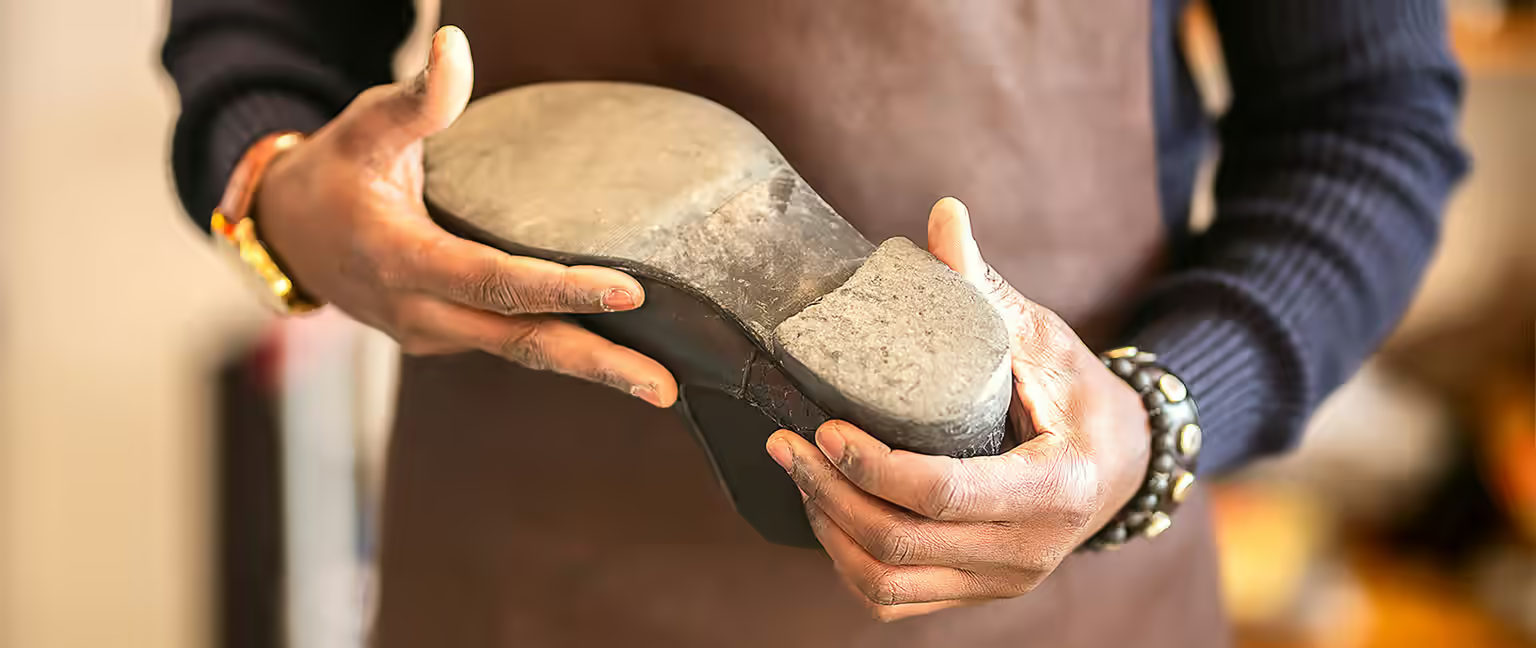
Replacing the heel tip is usually the first repair that matters for making a pair last. On leather-soled shoes you can see it when the rubber section on the back quarter of the heel has worn at an angle while the rest is still leather.
How urgent it is depends on how the shoes are used and on how the wearer walks. Bring them in and we will tell you what the wear is telling us.
If your shoes are losing colour, or the sole edge has gone grubby, do not get rid of them first. In many cases they can be cleaned and dyed back to their original colour.
Suede goes grey and tired easily, and it can be brought back with the right cleaning and dye. Scuffed white sneakers look new afterwards.

Four of the five can be dealt with long before the shoe is finished.
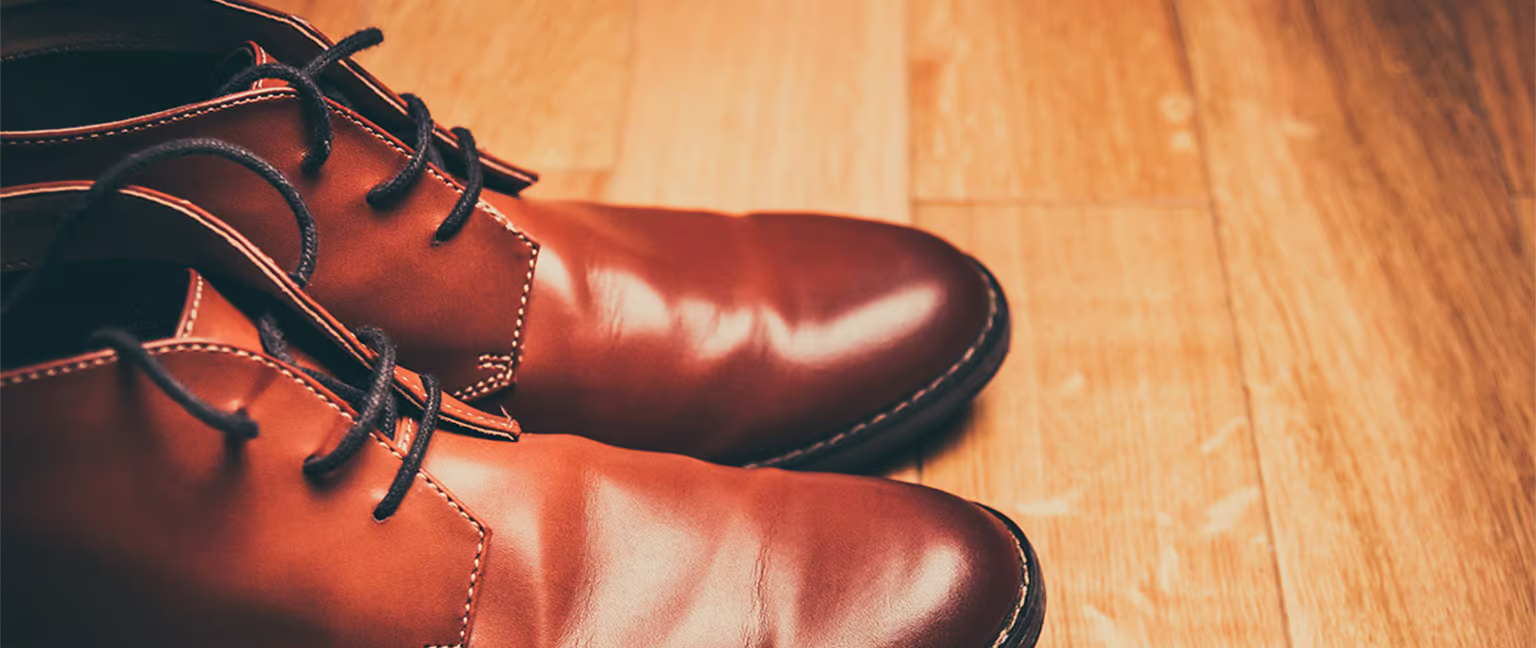
The sole on a pair of leather-soled, welted shoes wears down and can be replaced. Replacing the front section alone is often enough to keep them going for years.
Sometimes a full resole is needed, which is more common on rubber-soled shoes. The heel comes off and the whole sole is replaced.
If a favourite pair has started to rub, or a new pair feels tight across the foot, it can usually be fixed. Stretching the shoe on a last solves it in most cases.
Length is a different matter and cannot be gained. If the shoe is too short, there is nothing to work with.
A pair worn almost daily tends to develop a hole in the heel lining. The leather wears through where the heel sits, and it is common precisely because that part takes the most punishment.
It is a standard job and makes the shoe as good as new on the inside.
If you are not sure whether a pair is worth repairing, bring them in and we will look at them first and tell you what we see. What we take in, and what each job involves, is set out at the shoemaker’s.
Shop manager